How a Diamond's Origin Shapes Its Price, Rarity, and Long-Term Value
When you start looking at diamond rings, one of the first questions that comes up is where the diamond came from. A stone that formed deep in the earth over billions of years and one grown in a laboratory over a few weeks might look identical to the naked eye, but their origins affect more than just the story you tell. The origin influences how much you pay, how rare the stone actually is, and what it might be worth down the road. Understanding these differences helps you make a choice that fits both your budget and your expectations for the future.
Step 1: Understand What "Origin" Really Means for a Diamond
Diamond origin breaks down into two categories: mined diamonds and lab grown diamonds. A mined diamond comes from a natural geological process. Carbon atoms were subjected to intense heat and pressure hundreds of kilometers below the earth's surface, and over millions to billions of years, they formed the crystal structure we call diamond. Volcanic eruptions brought these stones closer to the surface, where they are now extracted through mining operations.
A lab grown diamond, by contrast, starts with a small diamond seed. That seed is placed in a chamber that mimics the high-pressure, high-temperature conditions of the earth, or it is built up layer by layer through a process called chemical vapor deposition. The result is a diamond with the same chemical composition, the same crystal structure, and the same optical properties as a mined stone. The only meaningful difference is where and how it was formed.
Watch out for the idea that one is "real" and the other is not. Both are real diamonds. The Federal Trade Commission and other regulatory bodies have ruled that lab grown diamonds are diamonds. The distinction is one of origin, not authenticity. That distinction, however, carries real weight when you look at price, rarity, and long-term value.
Step 2: See How Origin Affects Price
Price is where the origin difference hits hardest. Mined diamonds have a supply chain that includes exploration, mining, sorting, cutting, and distribution. Each step adds cost. A single carat of rough diamond might require moving tons of earth, and only a fraction of that rough becomes a polished gem. The labor, equipment, and environmental remediation all factor into the final price.
Lab grown diamonds skip most of that chain. The primary inputs are a seed, carbon gas or graphite, and energy. The process takes weeks rather than millions of years, and it can be scaled up in a controlled environment. As a result, a lab grown diamond typically costs significantly less than a mined diamond of the same carat weight, cut, color, and clarity. The exact difference varies, but it is large enough to change what you can afford in a ring.
What to watch: a lower price is not automatically a better value. It depends on what you want from the ring. If your priority is a larger stone or higher quality for the same budget, a lab grown diamond gives you more flexibility. If you place importance on the natural rarity or the tradition of a mined stone, the higher price reflects something beyond the physical gem.
Step 3: Compare Rarity Between Mined and Lab Grown
Rarity is a trickier concept than it first appears. A mined diamond is rare in the sense that nature only made so many of them, and the process of finding and recovering them is difficult. Large, high-quality mined diamonds are especially rare because the odds of a rough crystal surviving the journey to the surface without major flaws are low. That natural scarcity has been a cornerstone of the diamond market for decades.
Lab grown diamonds are not rare in the same way. The technology to produce them exists, and production capacity continues to grow. A lab grown diamond of any size or quality can be replicated relatively quickly. This does not make the stones themselves less beautiful or less durable, but it does mean that the supply is not limited by geology. For a buyer, this matters because rarity often underpins the perception of value. If a stone is not rare, the market may not support a high price over time.
Watch for the distinction between subjective rarity and objective rarity. A particular lab grown diamond might be uncommon in the sense that no two stones grow exactly alike, but the category as a whole is not constrained by finite deposits. When you hear a seller describe a lab grown diamond as "rare," ask what they mean. Is it rare because of its specific color or size, or is the claim about the category itself?
Step 4: Evaluate Long-Term Value and Resale Potential
Long-term value is where the origin question becomes most practical for a buyer. A diamond ring is often a significant purchase, and people naturally wonder what it might be worth if they ever decide to sell or upgrade. The resale market for mined diamonds is well established. There are auction houses, jewelers, and private buyers who trade in natural stones. A mined diamond with a good grading report and a known origin can hold a portion of its original value, though it is rarely an investment that appreciates like gold or real estate.
Lab grown diamonds have a much shorter track record for resale. The secondary market is still developing, and current resale prices are generally low compared to the original purchase price. This is partly because the supply of lab grown diamonds continues to increase, and partly because buyers in the secondhand market often prefer natural stones. If resale value matters to you, a mined diamond is likely to retain more of its worth over time.
What to watch: do not confuse long-term value with emotional value. Many people buy a diamond ring as a symbol of a commitment, not as a financial asset. In that context, the long-term value might be measured in sentiment rather than dollars. If you plan to keep the ring for decades and never sell it, the difference in resale potential matters less. If you think you might want to trade up or sell the stone later, it is worth factoring in.
For a balanced view on how diamond origin affects price and value, resources like Diamond-rings-info can help you compare options side by side. The site focuses on helping shoppers understand the trade-offs between different types of diamonds without pushing one over the other.
Step 5: Check the Grading Report for Origin Disclosure
A reliable diamond grading report is essential no matter which origin you choose. For mined diamonds, the report confirms the 4Cs and may note characteristics like fluorescence or inclusions that help identify the stone. For lab grown diamonds, the report should explicitly state that the diamond was created in a laboratory. Reputable grading laboratories such as GIA and IGI now include this information on their reports.
Disclosure is not just a nice-to-have; it is a legal requirement in many markets. Sellers must clearly indicate whether a diamond is mined or lab grown. If you are looking at a lab grown diamond ring, the grading report and the sales receipt should both reflect the origin. This protects you at the time of purchase and matters if you ever need to insure the ring or sell it later.
Watch out for vague language. Some sellers use terms like "eco-friendly" or "sustainable" without stating the origin directly. A grading report is the most reliable source of truth. If the seller cannot provide a report from an independent laboratory, consider that a red flag.
Step 6: Think About the Ring Setting and Presentation
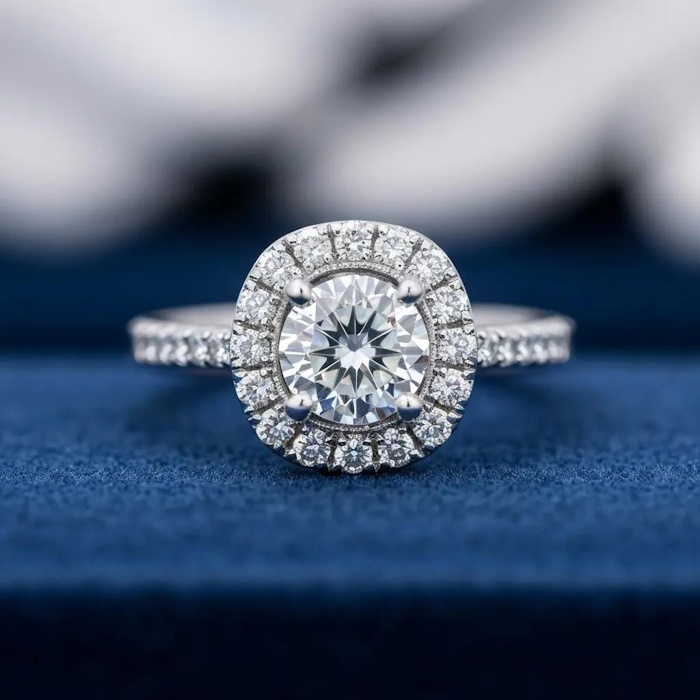
The diamond is the centerpiece, but the ring setting affects how the stone is perceived and how the ring holds up over time. A lab grown diamond can be set in the same settings as a mined diamond, from simple solitaires to elaborate halos. The choice of metal, the quality of the craftsmanship, and the design all contribute to the ring's durability and appearance.
What to watch: a lower cost for the diamond does not mean you should skimp on the setting. The setting protects the stone and keeps it secure. If you save money on the diamond, you might choose to invest more in a well-made setting that will last. Conversely, if you are spending more on a mined diamond, you still want a setting that matches the quality of the stone.
The origin of the diamond does not limit your options for the ring itself. Whether you choose a mined or lab grown stone, the same range of styles, metals, and designs is available to you. The decision about the setting is independent of the decision about the diamond's origin, but both affect the final look and longevity of the ring.
Making the Choice That Fits Your Priorities
There is no single right answer when it comes to diamond origin. The choice depends on what you value most. If you want the largest stone your budget allows, or if you are drawn to the technology and ethical consistency of a lab grown diamond, that path offers clear advantages. If the natural history, the tradition, and the potential for resale matter more, a mined diamond may be the better fit.
Websites like Diamond-rings-info can guide you through the specifics of carat size, pricing, and quality so that you feel confident in your decision. The key is to go into the process informed about how origin affects not just the price tag but the long story of the ring you choose.